Driveway Crack Repair Cost in Columbus (2026): What Homeowners Should Expect

September 1, 2026

A small crack in your driveway might not seem urgent – until water seeps in, winter hits, and that thin line turns into a spreading web of damage. At Columbus Concrete, we’ve been helping homeowners understand driveway crack repair cost in Columbus (2026) for years of experience, and we’ve noticed most people wait until minor surface cracks become structural concerns. Just last spring in Columbus, a homeowner called us after a hairline crack widened to nearly half an inch following freeze-thaw cycles. Ignoring early cracks can double or even triple your repair expense. What could have been a simple routed-and-sealed joint sometimes turns into partial slab replacement when subgrade erosion sets in. If you’re already seeing signs of wear, reviewing our driveway repair options in Columbus can help you understand the scope before damage escalates.

What Proper Driveway Crack Repair Should Include

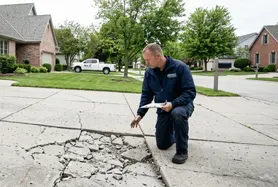
A concrete repair specialist kneels on a damaged residential driveway in a Columbus-area suburb, using a tool to assess a large crack and heaved section of broken concrete caused by freeze-thaw cycling and soil movement. The crumbling, displaced slab sections illustrate the type of driveway deterioration common in central Ohio's clay soil conditions, with well-maintained brick homes and manicured lawns visible in the background along the quiet neighborhood street.
The quality of crack repair directly affects how long the driveway lasts. Proper surface preparation, correct material selection, and movement accommodation matter more than simply filling a gap. We approach each repair with the assumption that Columbus weather will test it through freeze-thaw cycles, de-icing salts, and heavy vehicle loads. Professional driveway crack repair should include:
  • Mechanical routing of cracks wider than 1/4 inch to create a uniform reservoir.
  • Thorough cleaning using compressed air or pressure washing to remove debris and laitance.
  • Installation of closed-cell backer rod when cracks exceed 1/2 inch depth.
  • Use of flexible polyurethane or polyurea sealants rated for exterior concrete.
  • Tooling and finishing to ensure proper adhesion and water shedding.
We follow manufacturer specifications for joint depth-to-width ratios, typically maintaining a 2:1 width-to-depth proportion for flexible sealants. When contractors skip routing or apply sealant to dusty surfaces, adhesion fails within months. A low quote that doesn’t specify preparation steps often leads to premature failure. For structural cracks, epoxy injection may be necessary to restore load transfer. In cases of settlement, slab lifting through polyurethane foam injection may precede sealing. The Ohio Residential Code, which references the International Residential Code (IRC), requires stable load-bearing surfaces under driveways connected to garages to prevent structural compromise at foundation interfaces. Excellent service means evaluating drainage, not just the crack itself. If downspouts discharge onto the slab, we recommend extensions before sealing. Repairs performed without addressing water flow rarely last beyond a few seasons.
What Proper Driveway Crack Repair Should Include - Columbus Concrete

Understanding Costs, Timelines, and Prevention

Driveway crack repair cost in Columbus (2026) depends on crack severity and underlying conditions. Minor surface crack sealing might range from $300 to $800 for localized repairs. Moderate crack routing and sealing across multiple sections could fall between $800 and $2,500. If partial slab replacement is required, costs may range from $2,500 to $6,000 or more depending on square footage. Three primary variables influence pricing:
  • Site complexity and accessibility.
  • Material costs for sealants or lifting compounds.
  • Total scope, including leveling or slab replacement.
One homeowner postponed repairs for two seasons, hoping sealing could wait. By the time we evaluated the driveway, voids had formed beneath two panels. What could have been a $900 repair required foam lifting and joint reconstruction exceeding $3,500. Most crack repairs take one day, with sealants curing within 24 to 48 hours before vehicle traffic resumes. To prevent recurrence, we recommend:
  1. Annual inspection each spring.
  2. Sealing minor cracks before winter.
  3. Redirecting downspouts at least 3 – 5 feet away.
  4. Applying a penetrating silane/siloxane sealer every 3 – 5 years.
Regular maintenance typically costs a few hundred dollars every few years, far less than slab replacement. These figures are preliminary benchmarks for informational purposes only and do not constitute a binding quote. An on-site evaluation is required for a final proposal.


Schedule a Professional Driveway Evaluation

If you’re noticing cracks forming or widening, a professional inspection can determine whether simple sealing will solve the issue or if underlying settlement needs correction. We evaluate crack width, slab stability, drainage, and base conditions before recommending any repair method. That approach protects your investment and prevents unnecessary work. A timely assessment often reduces long-term repair costs and extends the life of your driveway by years. Our team provides detailed findings, realistic cost ranges, and clear next steps so you can plan confidently. Schedule an on-site evaluation and get a practical plan tailored to your driveway’s condition.
professional how to prevent concrete driveway cracks in winter overview in Columbus by Columbus Concrete

FAQs

Driveway crack repair cost in Columbus (2026) varies depending on crack size, depth, and whether there is underlying settlement. Small hairline cracks that only require cleaning and flexible sealant may cost a few hundred dollars if addressed early. Wider cracks that require routing, backer rod installation, and professional-grade polyurethane sealants typically cost more because of labor and material requirements. If vertical displacement or subgrade erosion is present, repairs may involve slab lifting or partial replacement, which increases costs significantly. Columbus weather plays a role as well. Freeze-thaw cycles expand trapped moisture, worsening untreated cracks each winter. Addressing damage before cold weather often reduces overall expense. The most accurate way to determine cost is through an on-site evaluation that measures crack width, checks slab stability, and assesses drainage conditions around the driveway.
Not all cracks indicate structural failure. Many concrete driveways develop minor shrinkage cracks within the first year after placement. These are typically narrow, less than 1/8 inch wide, and do not involve vertical movement. Cosmetic cracks can often be sealed to prevent water intrusion without major structural work. However, cracks wider than 1/4 inch or those with one side higher than the other may indicate settlement or soil movement. In Columbus, clay-heavy soils can expand and contract with moisture changes, contributing to slab shifting. The key distinction is movement. Active cracks that open and close seasonally require flexible sealants, while structural cracks affecting load-bearing areas may need epoxy injection or slab stabilization. A professional inspection determines whether the issue is cosmetic or structural before recommending repairs.
Several variables influence both cost and duration. Repair pricing may fluctuate based on site complexity, material costs, and total scope of work. A driveway with easy access and isolated cracks typically costs less than one requiring extensive routing or lifting equipment. Material selection also affects price. Polyurethane sealants and structural epoxies cost more than basic fillers but last longer under freeze-thaw stress. If slab lifting is required, specialized foam injection equipment adds labor and material expense. Most minor crack repairs can be completed in one day, with 24 to 48 hours of curing before vehicle use. Larger repairs involving partial replacement may take several days including curing time. These figures are preliminary benchmarks for informational purposes only and do not constitute a binding quote. An on-site evaluation is required for a final proposal.
Homeowners can address very small, non-structural cracks using store-bought concrete crack fillers if the crack is clean, narrow, and shows no vertical displacement. Proper preparation is critical. The crack must be free of debris, completely dry, and sealed with a product rated for exterior concrete movement. Professional repair is recommended when cracks exceed 1/4 inch, show displacement, or extend across multiple panels. Routing equipment, industrial air compressors, and commercial-grade sealants provide better adhesion and durability than most DIY kits. In our experience, improper surface prep is the most common reason DIY repairs fail within a year. If settlement or base erosion is present, only professional slab lifting or reconstruction will resolve the root issue rather than masking the symptom.
Preventive maintenance focuses on controlling water and protecting the concrete surface. Annual inspections each spring help identify new cracks before winter expansion. Sealing minor cracks promptly prevents water from penetrating and freezing inside the slab. Applying a penetrating silane or siloxane sealer every three to five years reduces moisture absorption while allowing vapor transmission. This type of breathable protection is preferable to film-forming coatings that may trap moisture. Downspouts should discharge at least three to five feet away from the driveway to prevent base erosion. Avoid using harsh de-icing chemicals that contain ammonium sulfate or ammonium nitrate, as these can chemically attack concrete. Consistent maintenance significantly extends driveway lifespan and reduces long-term repair costs.
Columbus experiences freeze-thaw cycles that place repeated stress on concrete surfaces. When water enters small cracks and freezes, it expands by roughly nine percent, widening the crack and weakening surrounding concrete. Over time, this process leads to scaling, spalling, and joint deterioration. Clay-rich soils in some areas of Columbus can expand when saturated and shrink during dry periods. That movement affects the stability of the aggregate base under driveways, sometimes causing settlement or cracking near garage entrances. De-icing salts used in winter can also accelerate surface deterioration if the concrete was not properly sealed. These regional conditions make early crack repair especially important. Addressing small cracks before winter significantly reduces the likelihood of structural damage the following spring.
Start by confirming that the contractor carries general liability insurance and, if applicable, workers’ compensation coverage. Ask about experience with crack routing, polyurethane sealants, and slab stabilization methods rather than simple surface patching. A detailed written estimate should outline preparation steps, materials, and curing times. Professionals should reference industry standards such as guidance from the American Concrete Institute for crack evaluation and repair methods. Be cautious of unusually low bids that do not mention routing, cleaning, or backer rod installation for wider cracks. Quality repairs require surface preparation and proper joint design. Contractors should also evaluate drainage conditions rather than focusing solely on visible cracks. A thorough assessment reduces the chance of repeat repairs within a few seasons.
Most driveway cracks are not emergencies, but certain signs warrant prompt evaluation. Cracks wider than 1/2 inch, noticeable sinking of one slab section, or pooling water near the garage entrance indicate potential subgrade erosion. If a crack creates a trip hazard or affects vehicle clearance, scheduling repair sooner helps prevent accidents and additional damage. While immediate structural collapse is rare, delaying repair through a freeze-thaw cycle can significantly worsen the condition. Water infiltration over winter often expands cracks and increases repair scope by spring. If you notice rapid widening, crumbling edges, or spreading patterns across multiple panels, arrange for a professional inspection. Early assessment typically limits repair complexity and prevents higher replacement costs later.